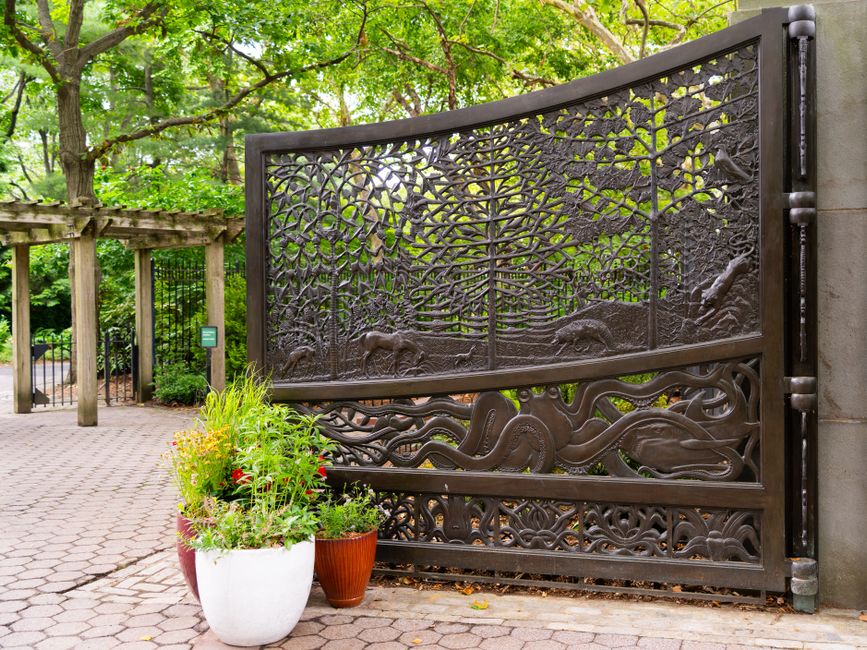

Iron Gates in Carlsbad, CA

Plain answers about iron gates for Carlsbad homes: how salt air and the marine layer affect metal, what good fabrication looks like, and how to plan a gate that swings true and holds its finish.

What We Cover

Iron Gates in Carlsbad, CA

An iron gate in Carlsbad lasts as long as its coating, its welds, its drainage and its footings allow. This site is an informational guide for homeowners in San Diego County who are planning a new gate, a replacement or a repair, and it is not a sales page.

Steel is strong, but moisture is what ends most gates here, so the details below matter more than the style of the scrollwork.

Coastal Air and Your Gate

Homes near Carlsbad State Beach, Agua Hedionda Lagoon and Batiquitos Lagoon sit in moist, salt laden air. The marine layer often leaves metal damp in the morning, and that thin film holds salt against the surface for hours. The same conditions apply in Oceanside and Encinitas, and they reach inland along Interstate 5 more than many owners expect.

What Decides How Long a Gate Lasts

Coating systems come first. A gate needs clean bare metal, a primer that bonds to it, and finish coats that cover edges, corners and weld seams. Thin spots at those places are where rust starts.

Hollow tubing needs drainage, because water that enters a closed section sits inside and rusts it from within. Welds should be sealed all the way around, and posts need footings set deep and square so the gate hangs true and keeps latching.

Repair, Replacement or New Build

A repair makes sense when rust is surface level and the frame is still straight. Cut out and weld new metal where tubing has rotted through, then recoat the whole gate. Replacement is the better call when posts have shifted, hinges have torn out, or the frame has twisted past what adjustment can fix. A new gate is a chance to correct the footings and drainage that failed the old one.

Guides

The guides cover property preparation, which metal holds up in salty air, how a custom gate is built and installed, the best time to install or paint, why gates rust, sag or stop latching, and how to judge the quality of the work.

Latest Guides

Green iron gate featuring cross design, in front of historical stone building entrance.

Adding an Automatic Opener to an Existing Iron Gate in Carlsbad

2026-10-26

You can add an automatic opener to an existing iron gate in Carlsbad, but only after the gate and its posts pass a short inspection. The opener is the easy part. The gate it will push and pull, the hinges it will lean on, and the salt air it will live in decide whether the conversion lasts or becomes a repair project within a few seasons.

Start With a Hand Test

Decorative iron gate featuring the year 1904, showcasing vintage design in London.

Unlatch the gate and swing it through its full arc by hand. A gate ready for automation moves smoothly with modest effort and stays where you leave it. If it drags, binds, or drifts open or closed on its own, that problem comes first.

A more powerful operator will not overcome a sagging or binding gate. It will strain against the fault, trip its obstruction sensing, and wear out early.

Weight and Leaf Length Set the Operator Size

Close-up of ornate wrought iron gate with skull and cross detail, outdoors.

Operators are chosen by how much the gate weighs and how long each leaf is. Length matters as much as weight. A long, light leaf puts more leverage on the operator arm and the hinges than a short, heavy one.

Most homeowners do not know what their gate weighs. An installer can estimate it from the tube sizes, the pickets and any infill panels. The operator should then be rated above that figure for the actual leaf length, not just the nameplate weight.

If a privacy panel or sheet infill was added after the gate was built, mention it when the operator is sized. Extra material adds weight and, as covered below, adds wind load.

Hinges: Where Old Gates Usually Fail the Test

Automation multiplies daily cycles many times over. A gate that opened twice a week by hand may open a dozen times a day with a remote. Hinges that were fine for the first pattern may not survive the second.

Old barrel or strap hinges often have pins worn oval and knuckles that have loosened. To check, grip the latch end and rock the gate up and down. Visible play at the hinge means the hinges need replacing. Heavy ball bearing hinges are a common upgrade at conversion time because they carry the load and swing with less effort.

Sag Is a Warning Sign

If the latch end sits lower than the hinge end, or scrapes the driveway, something is tired or bent. The cause might be a worn hinge, a racked frame or a leaning post. An opener will not correct sag. It will make the leaf bind partway through its travel and trip the obstruction sensing again and again.

The Hinge Post Takes the Force

The operator bracket usually mounts on or near the hinge post, and every cycle sends force into it. Push hard on the post near the top hinge. Any movement, cracked concrete at the base, or a post that is out of plumb has to be corrected before anything is bolted to it.

A post that moves a little under a hand will move a lot under a motor. Over time the gate drifts out of alignment, the arm binds and the gate stops closing fully.

Coastal Carlsbad Rust Hides Where You Do Not Look

Salt air drives corrosion in the Village, Terramar and the neighborhoods near the Agua Hedionda and Batiquitos lagoons. It tends to start where posts meet concrete, along bottom rails and at welds. Hollow tube can rust from the inside while the outside looks fine.

Before brackets are mounted, tap suspect areas and probe any bubbled paint. A mounting point on thin, rusted steel will not hold an operator for long.

Seal Every New Hole

Drilling or welding for brackets breaks the paint or powder coat. Each penetration should be cleaned, primed and painted. Near the coast this is the most likely place for new rust to start within a few seasons.

Choose Hardware With Salt in Mind

Use stainless or hot dip galvanized fasteners for brackets. Where possible, isolate stainless from bare steel, because dissimilar metals in damp, salty air speed corrosion at the contact point. Neither stainless hardware nor powder coat makes an iron gate maintenance free on the coast. Plan on periodic inspection.

Swing or Slide: Check What the Lot Allows

A swing gate needs clear space for the leaf to travel. A slide gate needs a straight, level run beside the opening at least as long as the gate, plus room for the operator. Many hillside lots in La Costa and Aviara have neither.

Driveway Slope

On a driveway that rises from the street, an inward-swinging gate can hit the pavement partway open. Fixes include regrading, rising hinges, cutting the leaf to follow the grade, or swinging the gate outward if that is safe and practical.

Santa Ana Winds Treat a Solid Gate Like a Sail

Strong offshore winds can push a solid or privacy-paneled iron gate hard, loading both the operator and the hinges. Open picket gates catch far less wind, but they are not immune.

Make sure the gate locks positively when closed. Install physical stops at the open and closed positions so the operator is never the thing stopping the gate. Ground stops or post stops take the impact off the gearbox and arm, and they keep wind from overdriving the leaf.

Retire the Old Latch

A gravity latch or drop rod engaged by habit will fight the opener. Remove it, or replace it with an electric lock or maglock tied to the operator. Double gates often need a center stop and a set opening sequence so the two leaves do not collide.

Safety Sensors Are Not Optional

Photo eyes should cover the path the gate travels, often on both sides for a swing gate. Contact edges on the leading edge add protection. Built-in obstruction reversing is a backup. It does not make a gate safe without photo eyes or edges.

Ornamental Iron Creates Pinch Points

Wide picket spacing, scrolls and decorative openings let hands, arms or a child's head reach through near the moving arm or the hinge gap. Fine mesh or a solid panel on the lower section of the leaf near the operator reduces that risk. So does guarding at the hinge side gap.

Keep a Separate Walk Gate

Walking through a vehicle gate while it moves is a common way people get hurt. A separate pedestrian gate gives everyone a safe alternative.

Power Planning Comes Before Landscaping

Line voltage operators usually need a dedicated outdoor circuit with GFCI protection, run underground from the house. Low voltage and battery operators simplify the wiring but still need a charging source. Have buried utilities and irrigation lines located before any trench is dug.

Solar and the Marine Layer

Carlsbad gets plenty of sun, but the marine layer in late spring and early summer can mean days of weak charging. Size the panel and battery for a run of gray days, face the panel toward good midday sun, and keep it clear of shade from growing hedges.

Batteries Wear Out

Backup and solar batteries do not last the life of the operator. Expect to replace them, often within a few years. Learn where the battery is and what a weak one looks like: slow travel, or a gate that stalls partway.

Placement and Daily Use

Mount the keypad where a driver can reach it from the car window, but not where someone could reach through the pickets from outside and press the button or the release.

Redirect sprinklers so water does not hit the operator, control box or photo eyes. Overspray is a common cause of corroded housings, failed control boards and spotted sensors.

Know the Manual Release

Every operator has a release for power outages or failures. Practice using it before you need it, and keep the key where everyone in the house can find it.

Routine Checks After Installation

Once a month, place a sturdy box in the gate path and confirm the gate stops and reverses. Then break the photo eye beam while the gate closes. If either test fails, stop using automatic mode until it is repaired.

Wipe the photo eye lenses and check their alignment during the same visit. Salt film, dust, cobwebs and hard water spots can blind or misalign the eyes.

So, Should You Do It?

Add the opener if the gate swings freely, the hinges are tight or can be replaced, the post is solid, the steel is sound, and the site has room for the gate to travel. If the hand test fails or the post moves, repair the gate first and automate second. In Carlsbad, where salt and wind work on metal every day, that order is what keeps the conversion working.


Read more →

An ornate iron gate with mountain and lake view, set in a serene garden in Bergamo, Italy.

Can a New Pedestrian Gate Match an Older Iron Fence in Carlsbad?

2026-10-26

A new walk gate can match an older iron fence, but only when the fabricator copies the fence's measurements instead of choosing from a catalog. In Carlsbad, where salt air, morning fog and daily sprinkler spray all age metal in their own ways, a good match also depends on how the new steel is protected and how the old run is prepared to sit beside it.

Start With the Material, Not the Style

An old iron gate with ivy in a weathered stone wall background.

Very little residential "wrought iron" is true wrought iron. Most of it is mild steel, either solid bar or hollow tubing, and some fences are aluminum. The gate should be built from the same material as the fence. A different metal looks, weathers and ages differently, even when the shapes are identical.

Two quick checks tell you most of what you need:

  • A magnet will not stick to aluminum.
  • Tapping a picket tells solid bar from hollow tube by sound.

Aluminum and steel parts cannot simply be welded or bolted together to make a match, so a steel gate does not belong on an aluminum fence without planning for it.

Measure the Pickets With Calipers

A small dog sits behind a decorative wrought iron gate on a graffiti-covered urban street.

Pickets that are 1/2, 5/8 and 3/4 inch square look alike from across the yard. Set side by side, the wrong size reads as wrong immediately. A tape measure is not precise enough, so use calipers.

Also note:

  • Whether the pickets are square, round or twisted.
  • Whether square pickets sit flat to the rails or are turned on the diagonal.

Spacing Is Measured Across Several Bays

Measure picket spacing center to center across several bays, not one gap. Older field-built fences often drift a little from bay to bay. A fabricator can split the difference so the gate reads as a continuous part of the fence rather than a panel with a slightly different rhythm.

Line Up the Rails

Record the height of every horizontal rail from the ground and from the top of the fence. The gate's top rail, bottom rail and any mid rails should line up with the fence rails. If they are off by even an inch or two, the eye catches it. On a sloped lot this matters even more, so see the slope section below.

Expect a Heavier Frame

A swinging gate needs stouter stiles and rails than a fence panel to resist sag. A good match keeps the picket size, spacing and rail lines the same while accepting a slightly beefier perimeter frame. That small difference in the outer frame is normal, and it is far less noticeable than mismatched pickets.

Copy How the Pickets Meet the Rails

Look closely at the joint. The common methods are:

  • Pickets passing through punched holes in the rail.
  • Pickets welded to the face of a flat bar.
  • Pickets set into a channel.

Each one throws a different shadow line. Copy whichever the fence uses, because a gate that uses a different joint looks different even when everything else is right.

Finials and Decorative Details

Spears, quad flares, balls and fleur de lis all come in many sizes and patterns. Older castings are often discontinued, and a catalog part that is "close" usually reads as different. No catalog finial or scroll can be assumed to match an existing fence just because the style is similar.

Before ordering, take one finial off, or photograph one with a ruler beside it. If no stock part fits, a matching finial can be cast from the existing one.

Then map a typical bay and count every decorative element:

  • Scrolls
  • Rings
  • Collars
  • Baskets or twists
  • Puppy pickets

Note where each sits relative to the rails, and repeat that pattern in the gate.

Choose the Top Line on Purpose

A flat-top gate continues the fence line. An arched or bowed top marks the entry. Either can work, but on a long flat fence an arch that is too tall or too shallow looks like a mismatch rather than a feature. Decide this deliberately and ask to see it drawn against the fence.

Check the Post Before Hanging Anything on It

A new gate cannot always be hung on an existing fence line post. Line posts are often too light for gate loads, and on older fences they are frequently rusted thin right at grade, where soil, mulch and sprinkler water sit. Probe the base with a screwdriver. If it is soft or flaking, a new, heavier gate post set in concrete is often the right call.

Check plumb and opening width as well. Measure the opening at both the top and the bottom. If it is wider at the top than the bottom, fix or replace the posts first, because a gate cannot be built to fit a twisted opening and still close cleanly.

A gate built square on the bench will still sag if the post is out of plumb or undersized. A diagonal brace, a properly sized frame and a hinge post that will not lean all help.

Carlsbad Conditions That Change the Build

Salt air near the coast

Homes near the beach, in Olde Carlsbad and the Village, and near Agua Hedionda, Batiquitos or Buena Vista Lagoon deal with the most corrosion. For new steel there, specify hot dip galvanizing under the powder coat, or at minimum a zinc-rich primer. Do not accept paint or powder applied straight over bare steel. Powder coat is not maintenance free or rust proof near the coast.

Marine layer mornings

Morning dew and fog keep metal damp well into the day. Touch up, prime and paint only once the surface is fully dry. Moisture trapped under a coating starts rust blisters early.

Sprinklers

Spray heads that wet the fence base every day are a leading cause of rust at the bottom rail and post feet in irrigated landscapes. Redirect heads, or switch to drip near the fence and new gate.

Hillside lots

In La Costa and other inland neighborhoods with grade, check whether the fence is racked to follow the slope or stepped in level sections, and match that at the gate. Confirm the bottom clearance is enough for the gate to swing without dragging on the uphill side.

Build the Gate So It Lasts

Hollow tubing needs to drain. Water condenses inside tube stiles and rails and rusts them from the inside out. Ask for:

  • Small weep holes at the low points.
  • Sealed caps on open tops.
  • Primer on every cut end before the frame is closed up.

Weld zones and ground spots are where rust starts first on new gates, and in salt air an unprotected weld can show rust bloom within one season. Ask that every weld be ground, cleaned and fully coated.

Hardware matters too. Weld-on barrel hinges look traditional, while bolt-on adjustable hinges allow later correction for sag or settling. Use stainless or galvanized hardware and fasteners, and avoid mixing metals that react. Plain steel screws in an aluminum gate corrode quickly, especially in coastal air. If the fence encloses a pool, confirm closing and latching requirements with the city and the HOA before choosing hardware.

Matching the Finish

A paint code alone will not match a weathered fence. Years of sun and repainting change both color and sheen. Bring a physical sample, such as a removed finial, a cap or a scraped chip. Match the sheen as well as the color, because new gloss powder coat beside chalky old paint looks wrong even when the black is technically correct.

A new gate will also not age at the same rate as the older fence beside it. For that reason, refinishing the whole visible run along with the gate is often the most reliable route to a true visual match. Proper prep means:

  • Wire brushing loose rust down to firm metal.
  • Treating remaining rust.
  • Priming bare spots.
  • Applying the topcoat.

Get Approval and Give a Complete Package

Many Carlsbad planned communities review fence design and color. Submit drawings and a color sample to the HOA before fabrication so the gate is not built twice.

Then give the fabricator everything in one package:

  • Photos with a tape measure visible in the frame.
  • Caliper measurements of the pickets and rails.
  • Center-to-center spacing across several bays.
  • Rail heights.
  • Opening width at the top and bottom.
  • The finial sample.

With those details in hand, a new walk gate can sit in an older iron fence and look like it was always part of it.

Read more →

Nearby Service Areas

We also cover Austin steel gates.